
Manufacturing Logistics
Manufacturing logistics.
Built around the production plan.
Coordinate supplier freight, off-site inventory, scheduled facility replenishment and finished-goods distribution around documented material, facility and customer requirements.
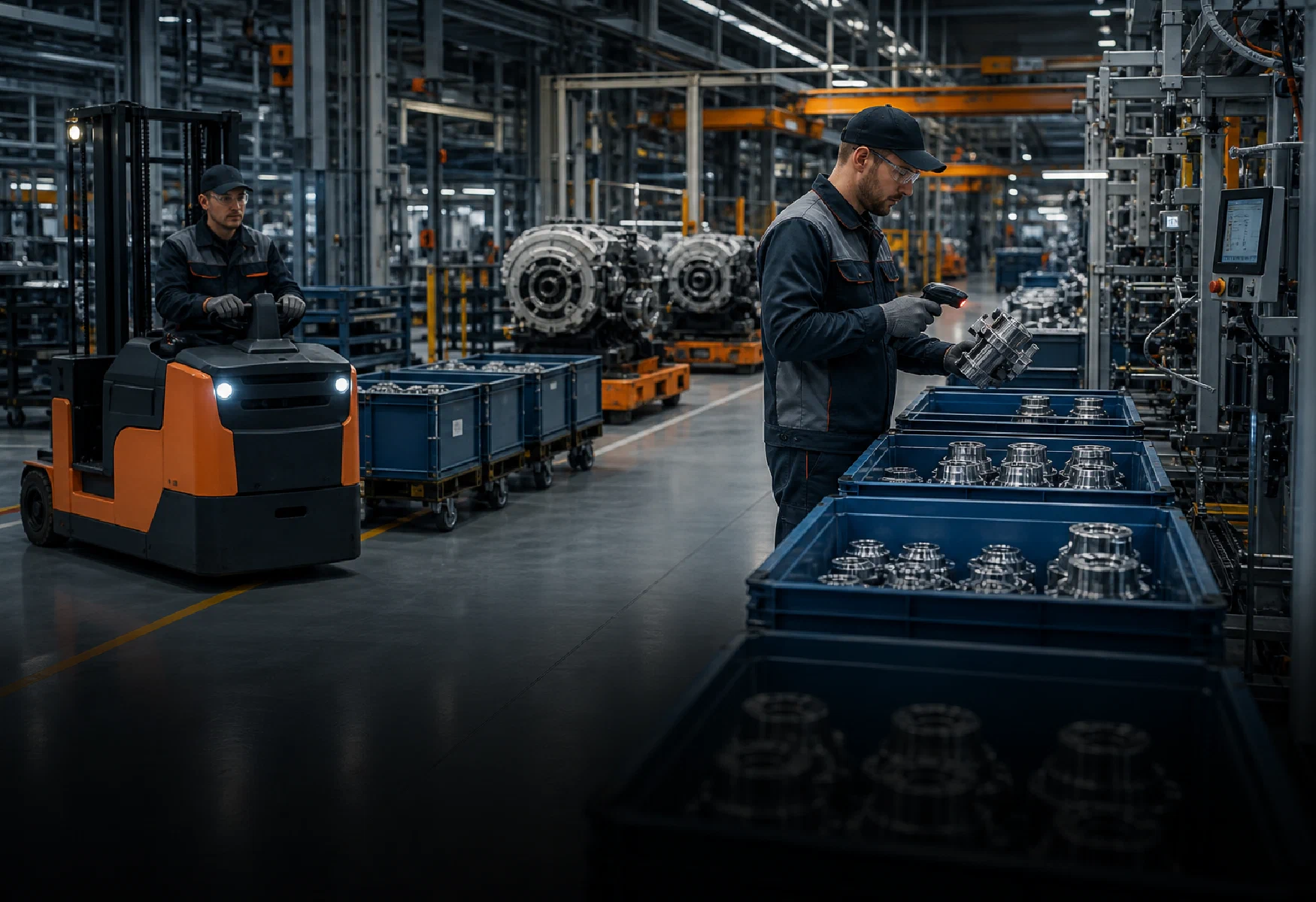
Supplier · inventory · facility · customer
Each handoff tied to the next requirement.
100+
Carrier partners
05
Warehouse locations
250k+
Sq. ft. available
CA · US
North American reach
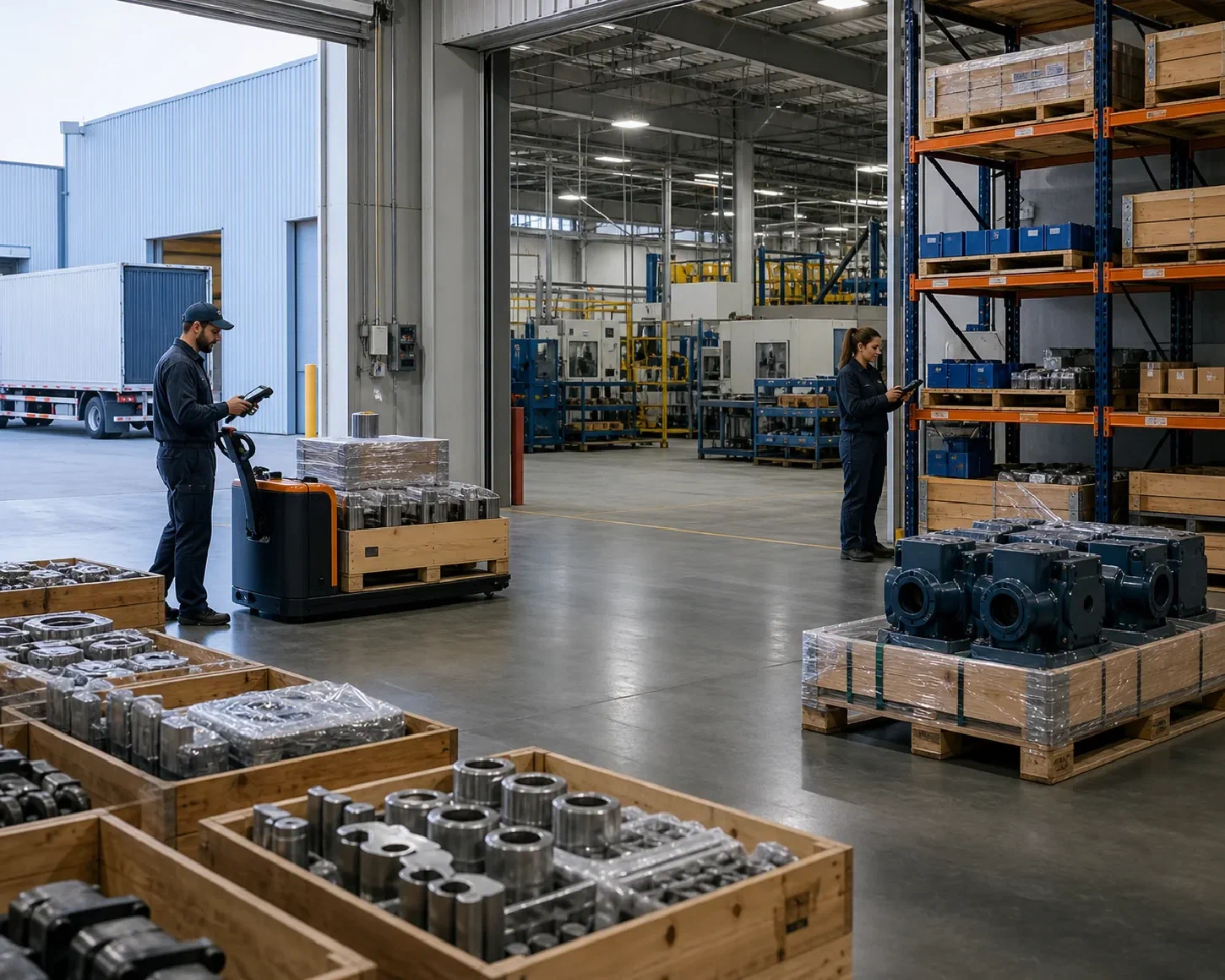
Services around production
The physical network around the production plan.
Start with the real material, handling unit, facility, schedule and destination requirements. Then connect the applicable transportation, warehousing, inventory and distribution services around them.
Carrier Management
Coordinate providers, modes and shipment requirements.
Warehousing
Position eligible materials, packaging and finished goods.
Inventory Management
Use the item, owner, status and location fields the program needs.
Public Warehousing
Add shared capacity for overflow, surges or transitions.
LTL Freight
Move palletized and partial-load shipments.
Full Truckload
Plan dedicated capacity for larger movements.
Cross-Border Shipping
Connect Canadian and U.S. supplier or customer movement.
Distribution Services
Route finished goods to facilities, distributors and customers.
Supplier-to-customer material flow
Keep each handoff connected to what happens next.
A usable manufacturing flow begins with the item and freight profile—not a generic promise of speed. Keep supplier instructions, shipment identity, receiving status, inventory position and the authorized outbound requirement connected.
Bring in
Confirm supplier pickup, handling unit, equipment, access and delivery-window details.
Position
Receive, identify, status, locate and stage eligible inventory.
Release and move
Replenish the facility or distribute finished goods against an authorized requirement.
Product and facility fit is confirmed before launch. Oversized, controlled, dangerous, temperature-sensitive or high-value items may require a separate operating design.
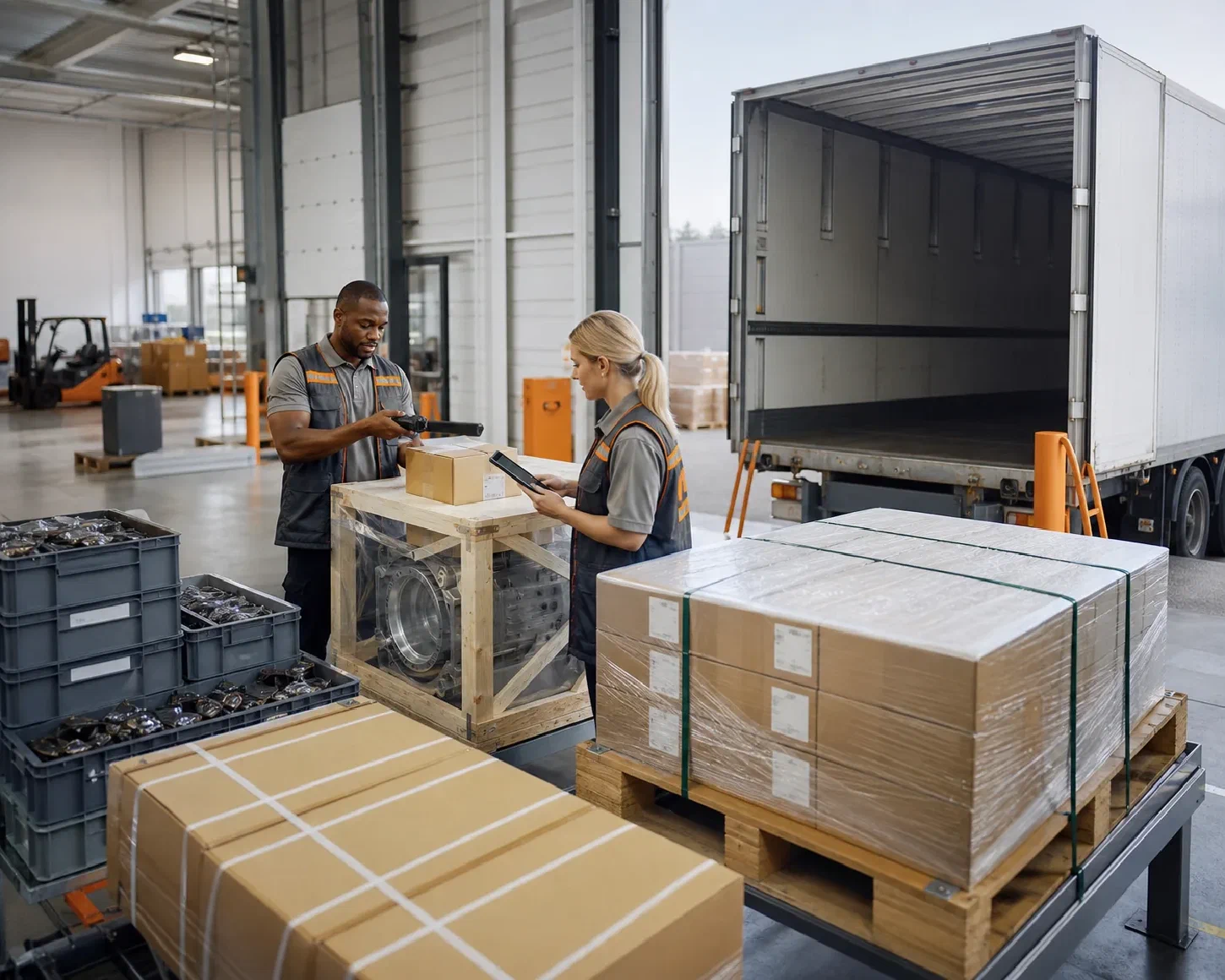
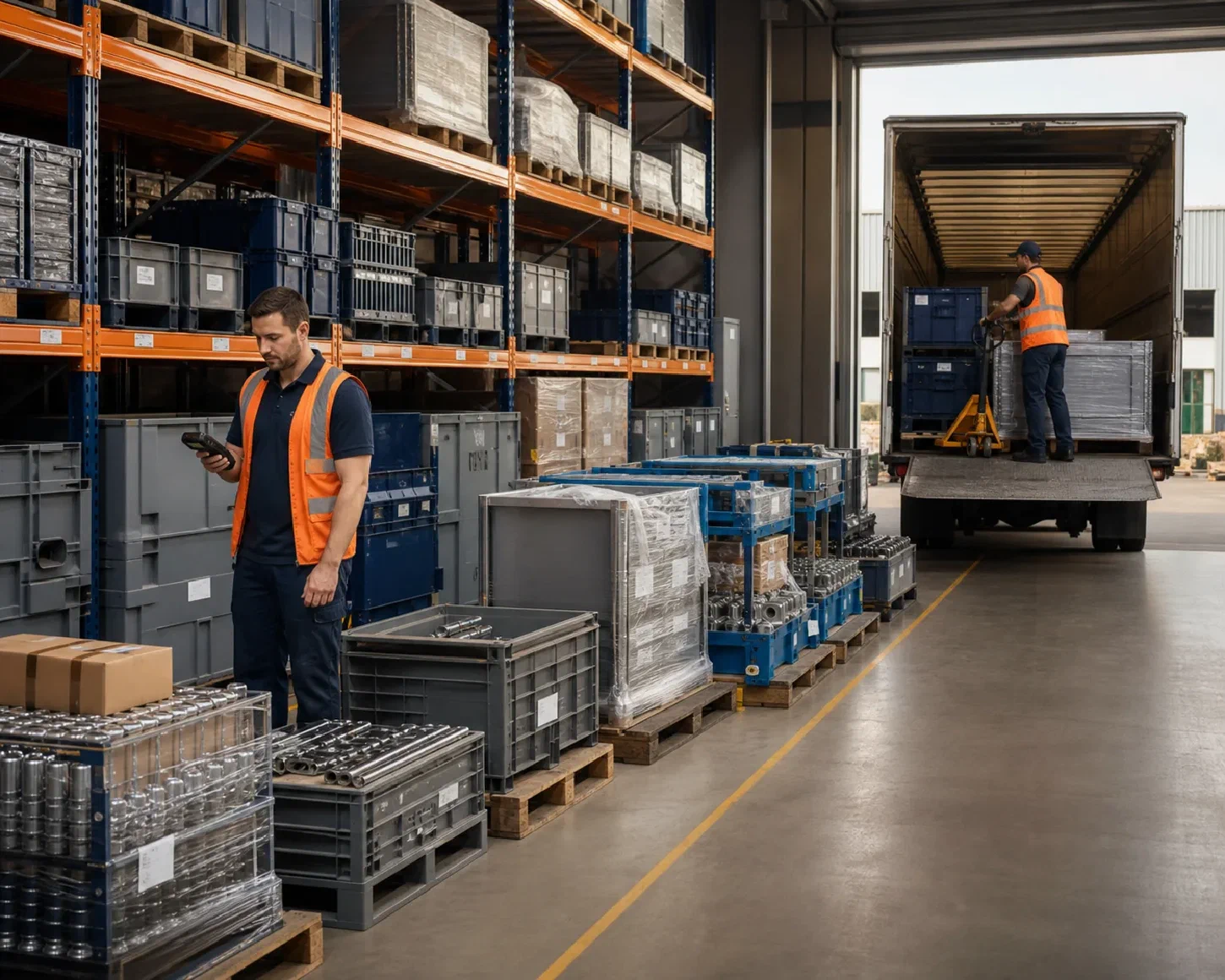
Off-site inventory & scheduled replenishment
Stage materials against the agreed production signal.
Eligible components, packaging and supplies can be positioned outside the plant, then allocated, staged and delivered when an approved replenishment request is released.
Define the inventory
Set item identity, ownership, status, handling conditions and unit of measure.
Translate the request
Confirm quantity, destination, facility window and the required handling unit.
Stage and hand off
Prepare the release, coordinate delivery and assign ownership for open exceptions.
Scheduled replenishment is designed around agreed release times, facility access and available capacity; it is not a guarantee of uninterrupted production.
Finished-goods distribution
Match the movement to the load and destination.
Move eligible finished goods or service parts as cartons, palletized LTL or dedicated truckload shipments. Carry distributor, retailer, business, facility and customer requirements into the transportation plan.
Cartons & parts
Smaller shipments and service-part movements.
Palletized LTL
Partial-load freight with facility and handling requirements.
Full truckload
Dedicated capacity for larger or consolidated movements.
For cross-border freight, ShipCarte can coordinate carrier and broker handoffs. Importers and exporters remain responsible for classification, origin, value, compliance information, duties, taxes and required records.
Build your manufacturing plan →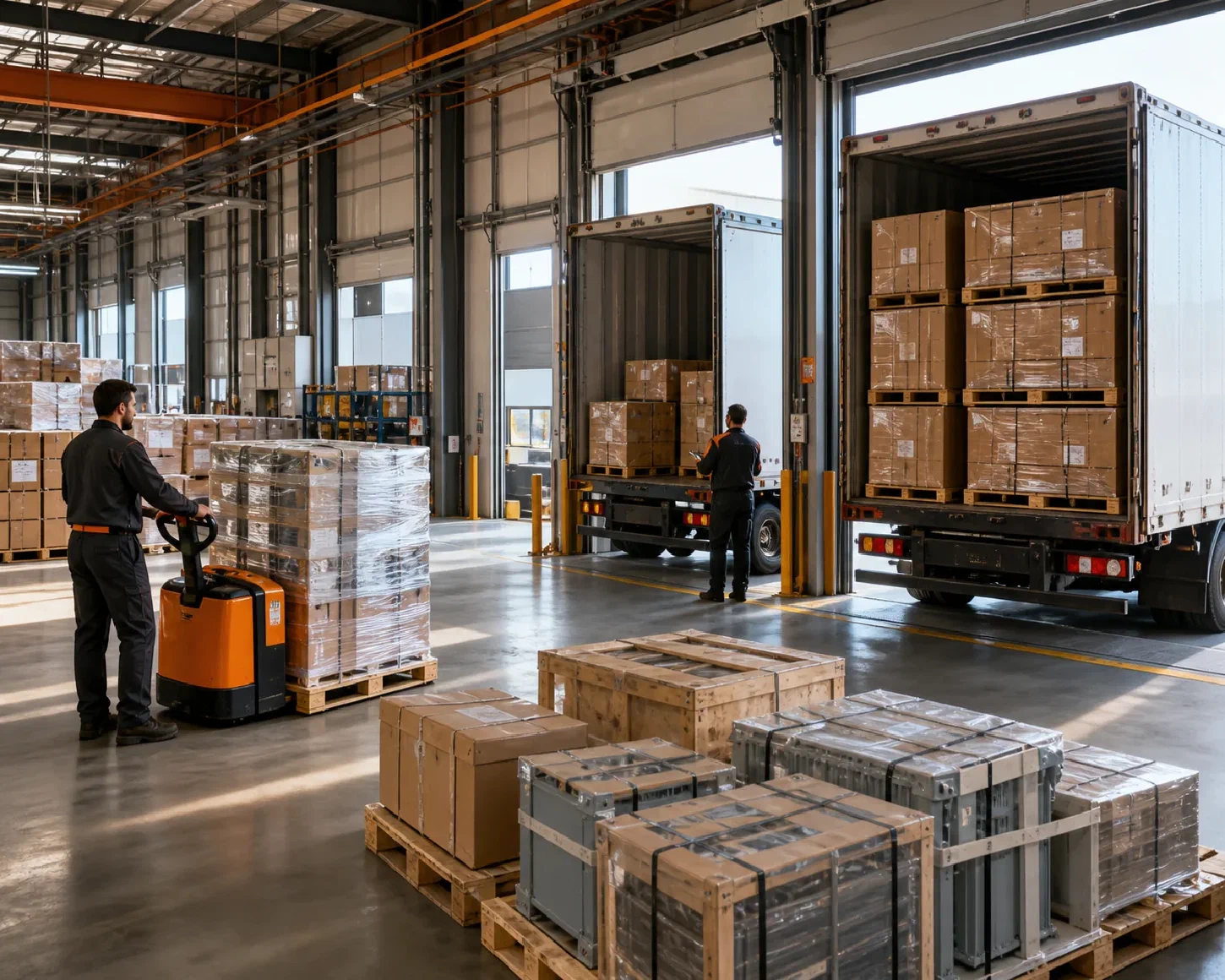
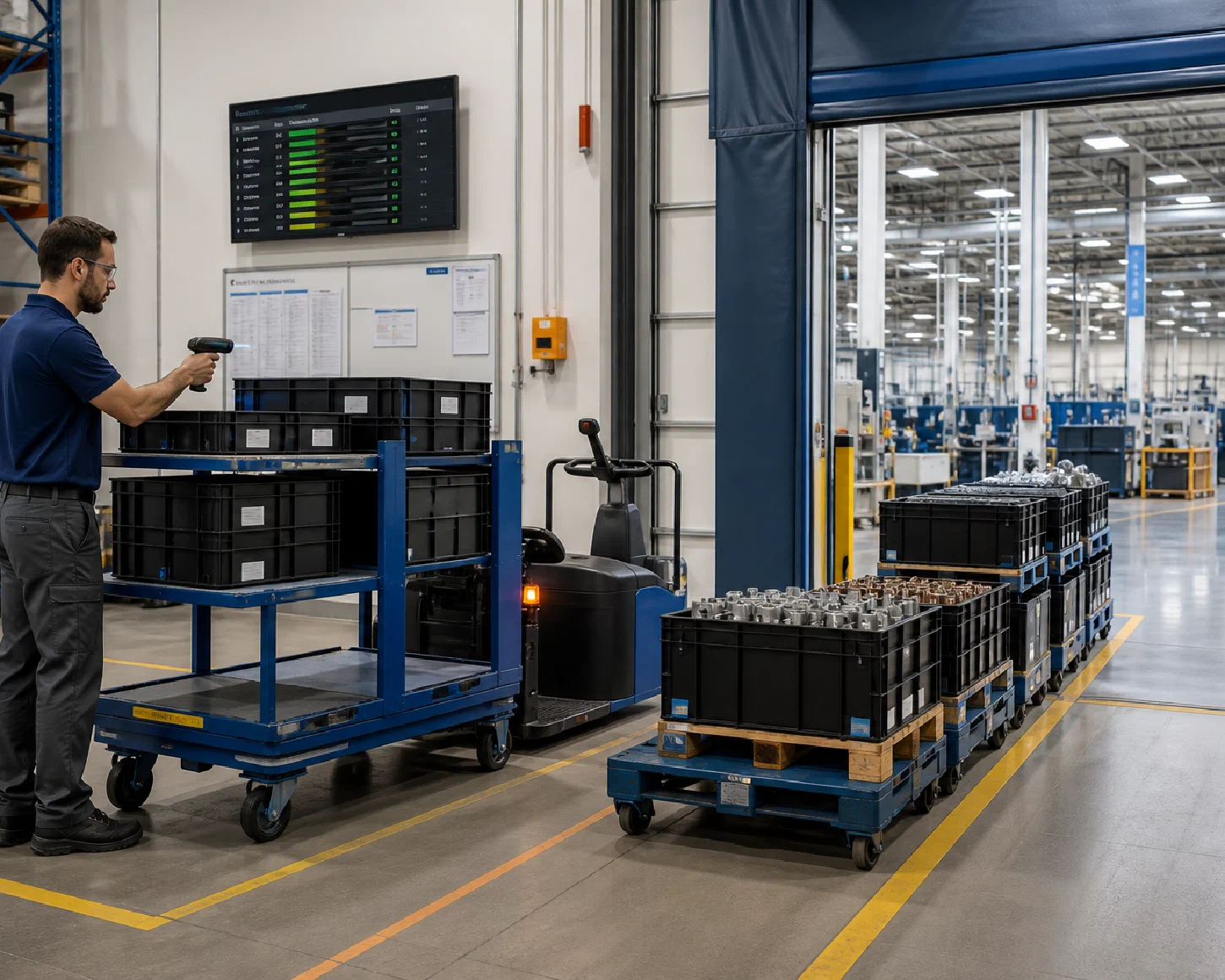
Inventory states, holds & change
Keep what can move separate from what needs a decision.
Materials, components, packaging, staged stock and finished goods can require different ownership, location, status and release rules. Flexible space can absorb overflow or transitions without making every unit available to production or distribution.
Identity & ownership
Connect the item, handling unit, owner and lot or serial attributes where required.
Status & separation
Keep available, staged, held, damaged or nonconforming stock distinguishable.
Authorized release
Acceptance, rework, return or another disposition follows documented owner criteria.
Manufacturing logistics FAQ
Questions around the production flow.
Material, facility, freight and schedule requirements shape the right operating model.