
Cold-chain fulfillment
Temperature-sensitive orders.
Built as one controlled flow.
Connect eligible inventory, defined packout, controlled staging and carrier handoff around the product’s actual handling requirements.
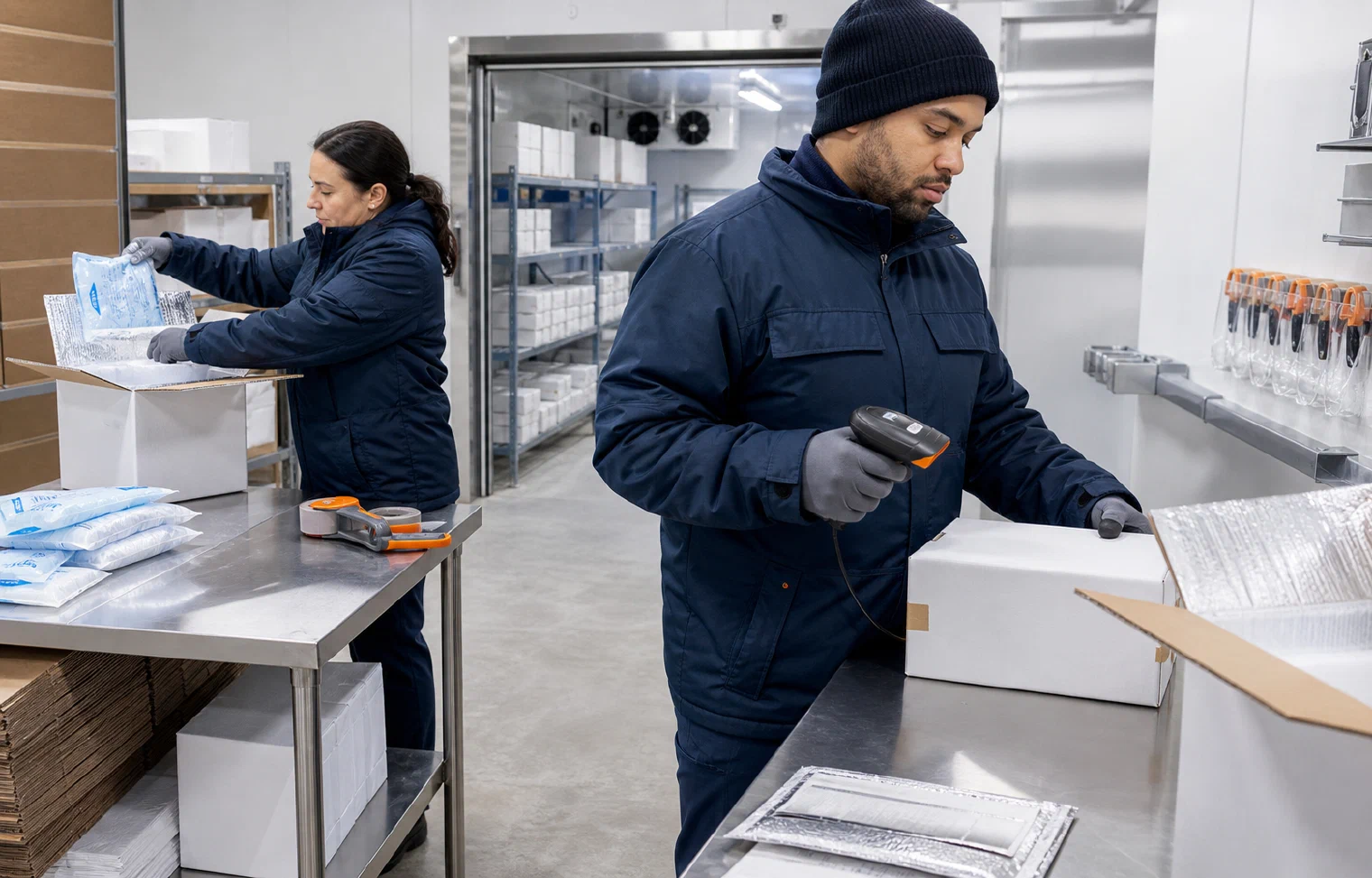
Receive · Select · Pack · Stage · Handoff
The product requirement stays connected to the order.
The order is only one part
Cold-chain fulfillment begins before the pick and continues beyond the packout.
Storage condition alone does not define the finished shipment. Product status, lot and date, packing instructions, exposure time, carrier timing and exception ownership have to work as one order-level plan.
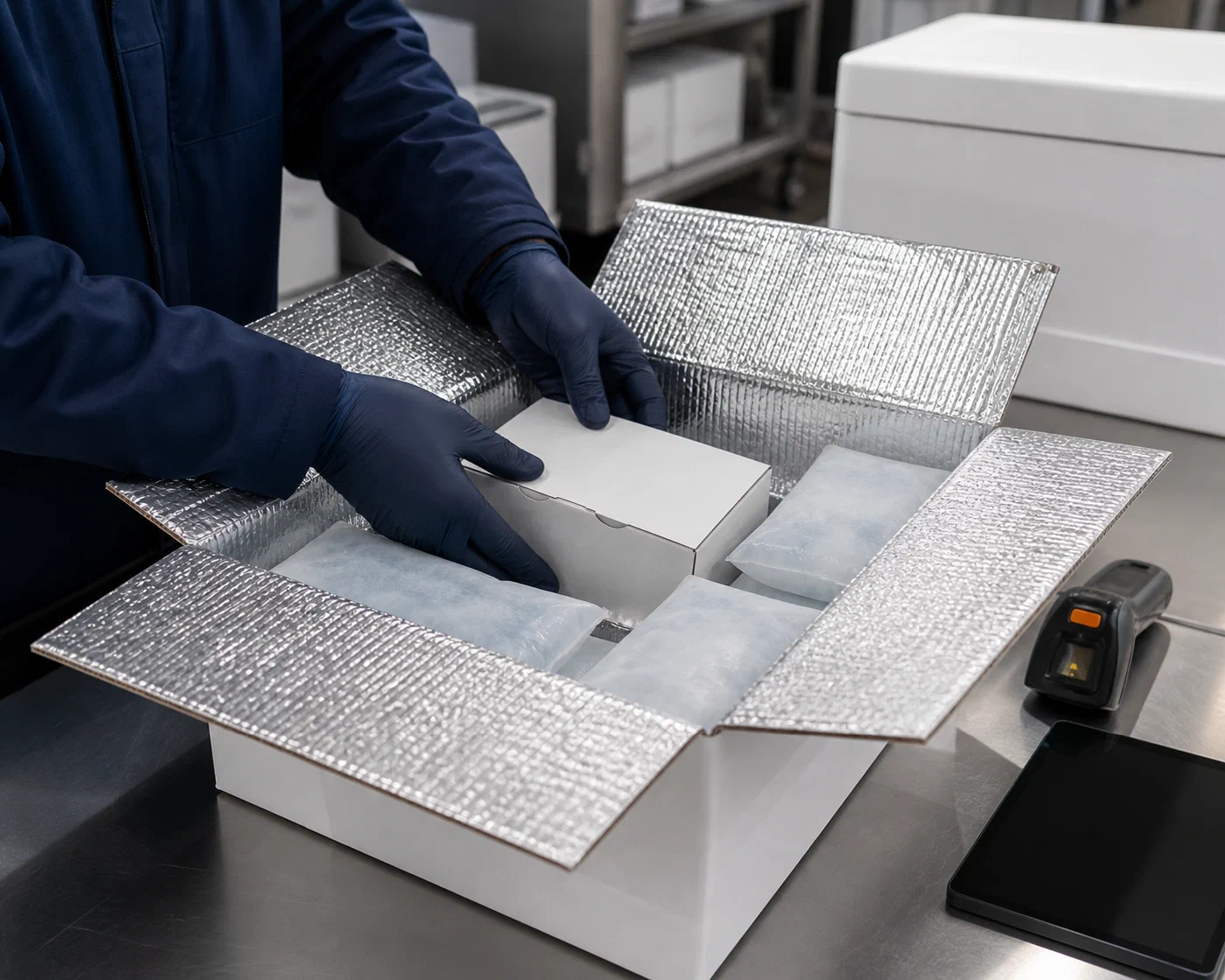
Packout discipline
Turn the approved configuration into repeatable work.
The product owner’s requirements should define the shipper, insulation, coolant, product placement, closure and any monitoring needed for the intended conditions, lane and duration.
ShipCarte translates that instruction into a clear workstation sequence, so the correct components are available and each layer can be checked before the package is released.
One repeatable cold-order flow
Keep condition, identity and time connected.
Each step carries the product requirement forward instead of leaving the packout team to reconstruct it at the end.
Receive
Capture status, lot and date, and handling instructions at receipt.
RequirementsAllocate
Select released stock using the approved rotation and remaining-life rules.
Eligible inventoryPrepare
Stage the correct shipper, insulation, coolant and any required monitor.
ComponentsPack
Build product placement and closure to the active work instruction.
ConfigurationStage
Hold the finished shipment in its defined conditions until carrier arrival.
Time controlFollow
Connect pickup, movement and open exceptions to the shipment record.
HandoffInventory and exposure
Choose the right unit—and limit uncontrolled time.
The pick decision can consider release status, lot, relevant dates, destination and the active rotation rule. Once selected, the order should move through a sequenced workflow that keeps time outside the defined environment visible.
Condition context
Keep the product’s handling needs visible at every step.
Lot & date
Tie the selected unit back to its inventory identity.
Work instructions
Present the active process where the order is handled.
Handoff window
Coordinate finished packout with the planned pickup.

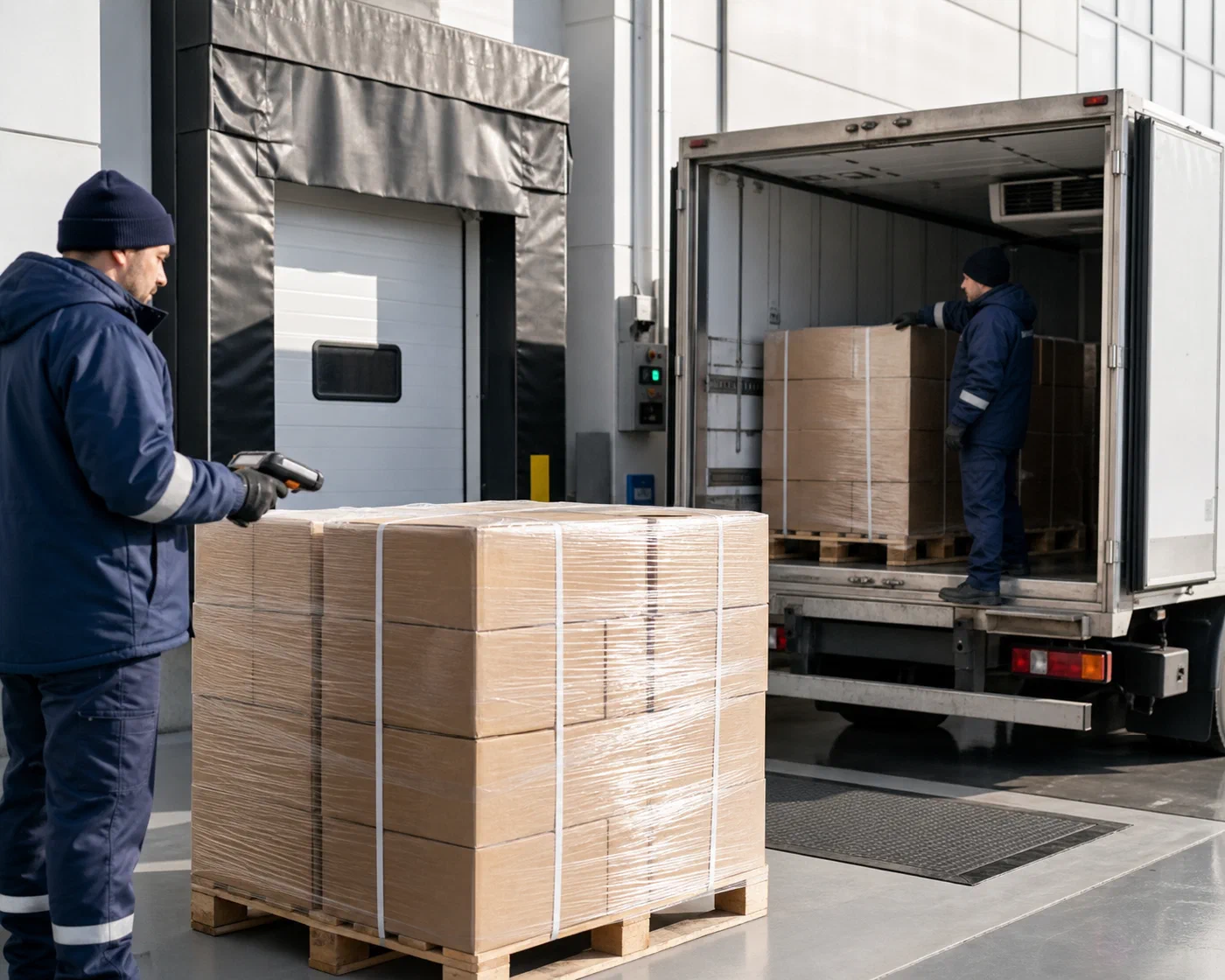
Release and handoff
The package may be closed. The operating plan is not.
A completed packout still needs a deliberate release, controlled wait and confirmed carrier acceptance. These moments connect warehouse execution to the delivery journey.
Quality release
Confirm the active instruction, closure, label and any required monitor before dispatch.
Controlled staging
Keep the finished shipment in its defined condition while waiting for pickup.
Carrier acceptance
Record the handoff and keep movement or exceptions connected to the order.
Cold-chain fulfillment FAQs
Questions before temperature-sensitive orders move.
A dependable plan starts with clear product requirements, inventory rules, packout instructions and handoff expectations.