
Cold storage
Cold storage.
Controlled beyond the room.
Connect receiving condition, inventory identity, storage placement, monitoring and outbound release around the way your product needs to be handled.

Receive · Identify · Store · Monitor · Release
A condition-led plan from arrival to handoff.
Condition at every handoff
Cold storage starts before the product reaches the rack.
The room matters, but so do the moments around it. ShipCarte shapes the operating flow around arrival checks, controlled transfer, clear inventory status and a release plan that keeps completed freight from waiting in the wrong place.
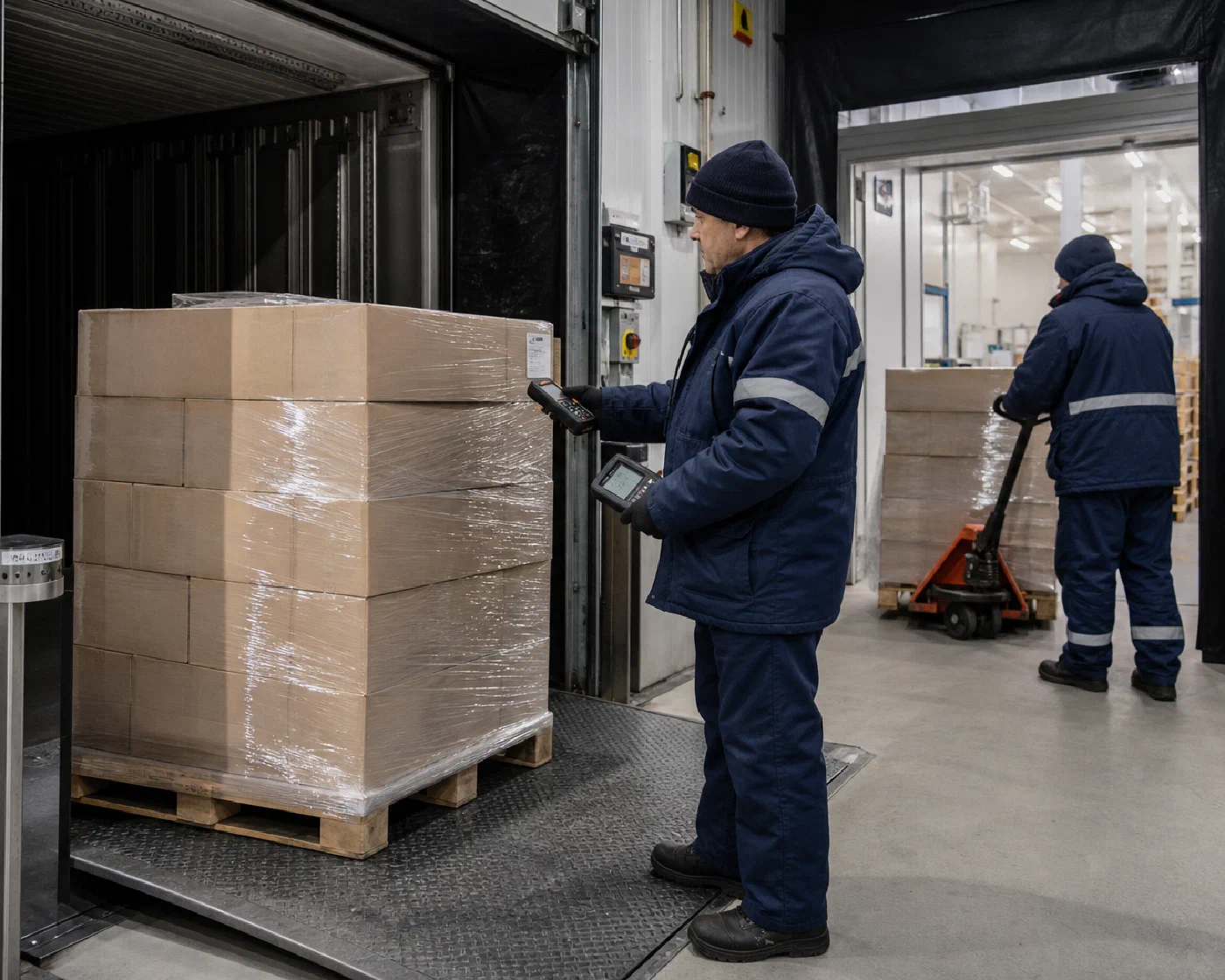
Inbound condition
Receive with the storage requirement already in view.
An appointment is easier to control when the team knows what is arriving, how it should be handled and what evidence or observations are needed before inventory becomes available.
Define the product profile, expected condition, lot or date information, packaging checks and exception path before the trailer reaches the dock. That gives the receiving team a practical decision—not a rushed assumption.
One disciplined cold-storage flow
From receiving condition to outbound release.
Each step keeps the physical pallet connected to the product profile, inventory status and next authorized movement.
Plan
Define the required condition and handling approach.
Product profileReceive
Check the load, packaging and agreed evidence.
AcceptanceIdentify
Capture product, lot, date and inventory status.
TraceabilityPlace
Assign a compatible location without losing identity.
StorageMonitor
Connect condition records to a clear exception path.
ResponseRelease
Verify, stage and hand off the right inventory.
OutboundInventory inside the room
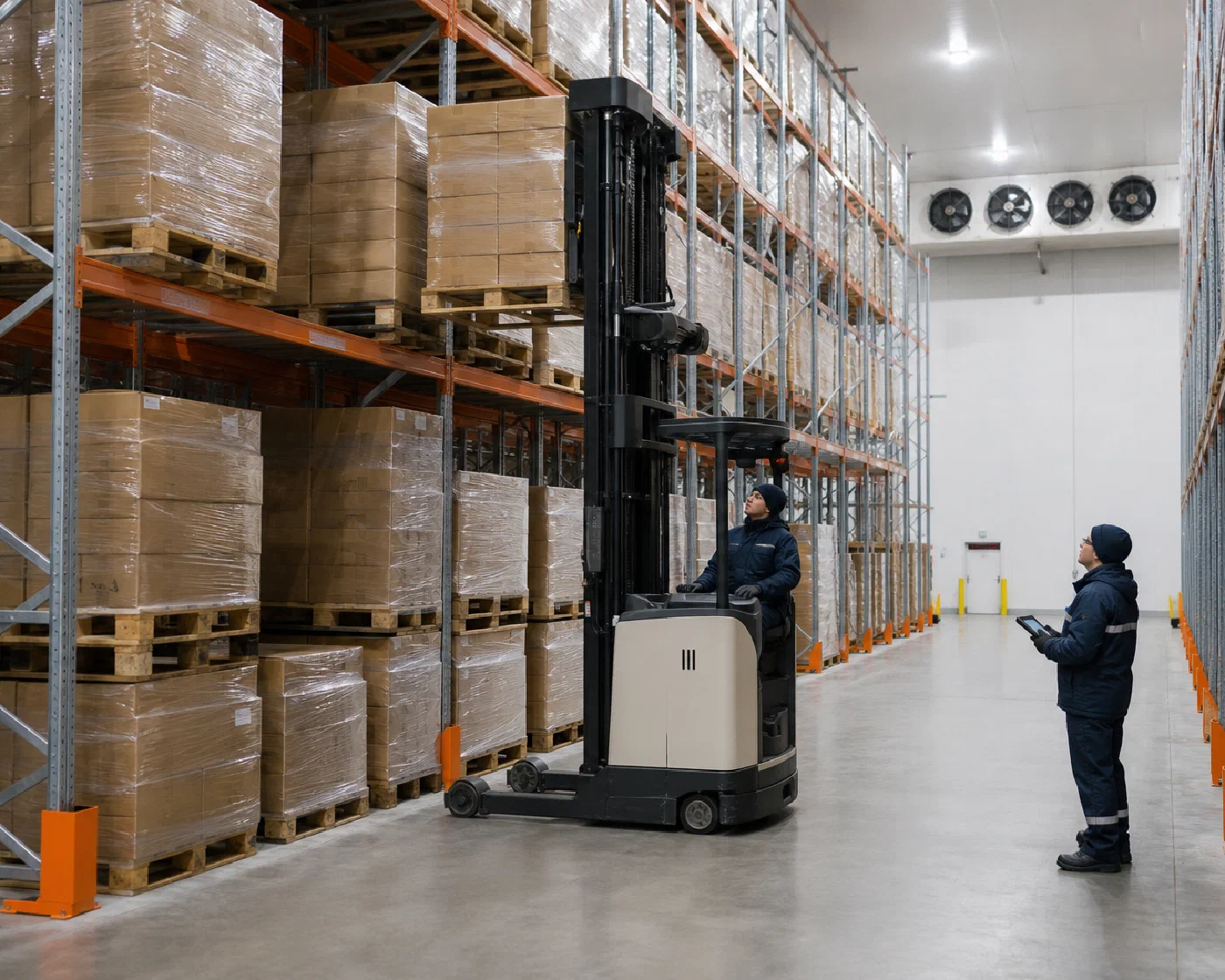
Place for condition, access and traceability.
Storage locations should support the product requirement and the work around it. Inventory remains more useful when teams can distinguish what is available, what is held and what must move first.
Zone fit
Match the product profile to a suitable storage environment.
Placement discipline
Respect access, facility equipment and airflow needs.
Status control
Keep available, held and non-conforming stock distinct.
Rotation rules
Apply the agreed lot, date or shelf-life sequence.
Release and handoff
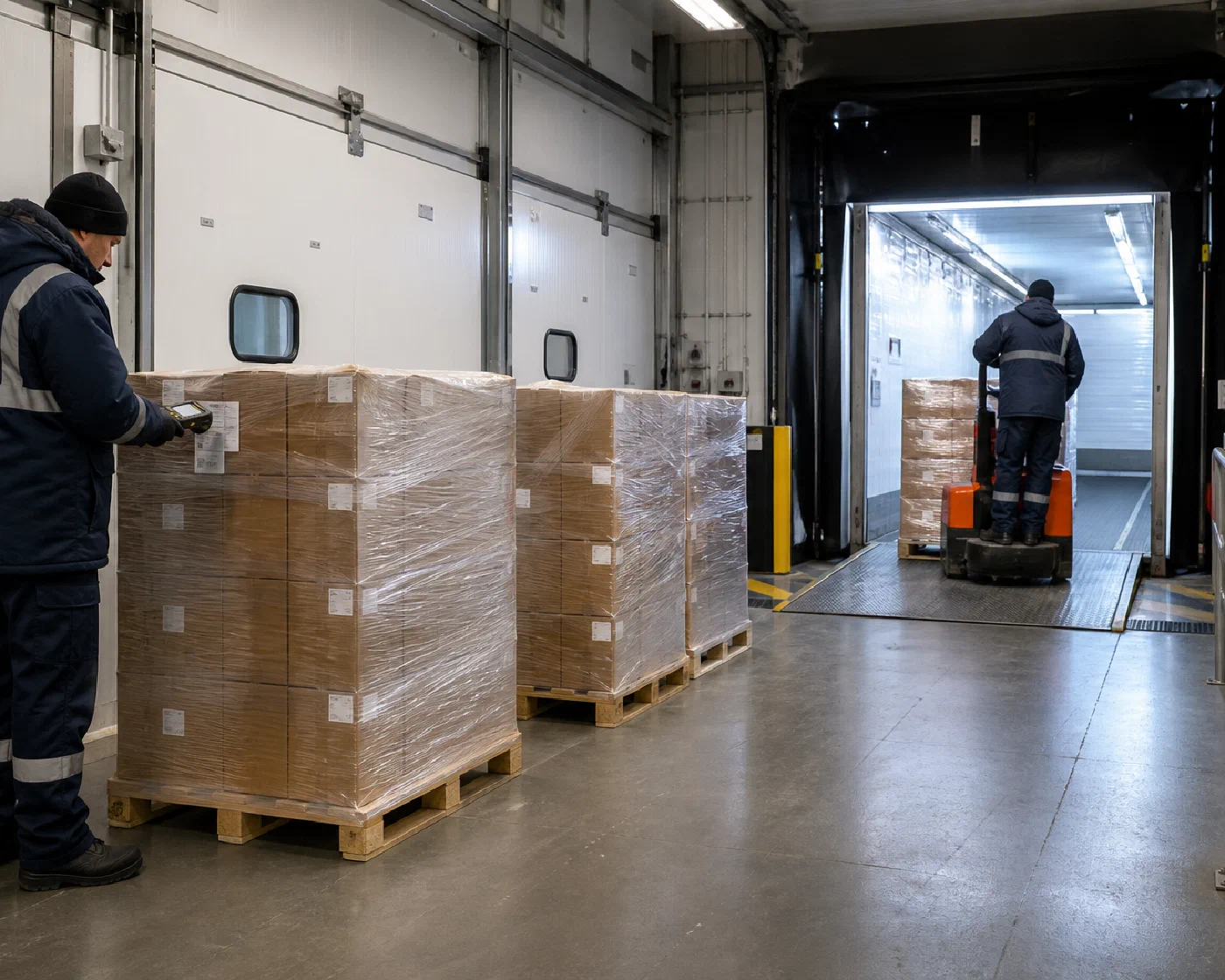
Do not let finished freight wait outside the process.
The outbound plan brings allocation, pick timing, controlled staging and carrier readiness together so product moves deliberately from location to trailer.
Pick and verify
Select eligible inventory using the agreed lot or date rule.
Stage with purpose
Coordinate completed freight with the planned loading window.
Handoff and close
Confirm carrier acceptance and update the inventory record.
Cold storage FAQs
Questions before inventory enters the room.
A useful cold-storage plan begins with the product’s documented needs and the way inventory will move through the operation.