
Kitting & assembly
Every component.
One controlled result.
Turn components into retail-ready kits, product bundles and promotional packs through a build process shaped around your approved specification.

Define · Stage · Build · Inspect
A repeatable kit, built to the active standard.
The build starts before assembly
A finished kit begins as a controlled definition.
ShipCarte connects component inventory, active instructions and quality criteria before work begins—so the team knows what to build, how to build it and what must be true before the finished kit can enter inventory.

Build specification
Make the approved result repeatable.
A sample alone does not tell a work cell how to reproduce the result. The operating specification needs the right components, quantities, sequence, packaging and presentation standard for each active kit.
Define approved substitutions, variant logic and objective quality checks up front. That clarity protects the build when materials, promotions or product versions change.
One repeatable build flow
From loose components to released inventory.
Each stage keeps material identity, the active instruction and the finished result connected.
Receive
Verify incoming parts and packaging against the plan.
ComponentsConfirm
Check that the complete planned quantity can be built.
AvailabilityStage
Bring the correct materials and active instruction together.
Work cellAssemble
Build each version in the approved sequence and orientation.
KitInspect
Check completeness, presentation and required controls.
QualityRelease
Record accepted kits as available finished inventory.
Finished SKUQuality at the work cell
Build the check into the work.
Quality is easier to protect when the standard is visible and exceptions have a separate path. Inspect the details that matter to your product before accepted and uncertain units can mix.
Active instruction
Keep the current sequence and visual standard at the cell.
Component control
Reconcile material use against the completed build.
Objective checks
Confirm completeness, placement, closure and presentation.
Exception path
Hold incomplete or uncertain work for a clear decision.
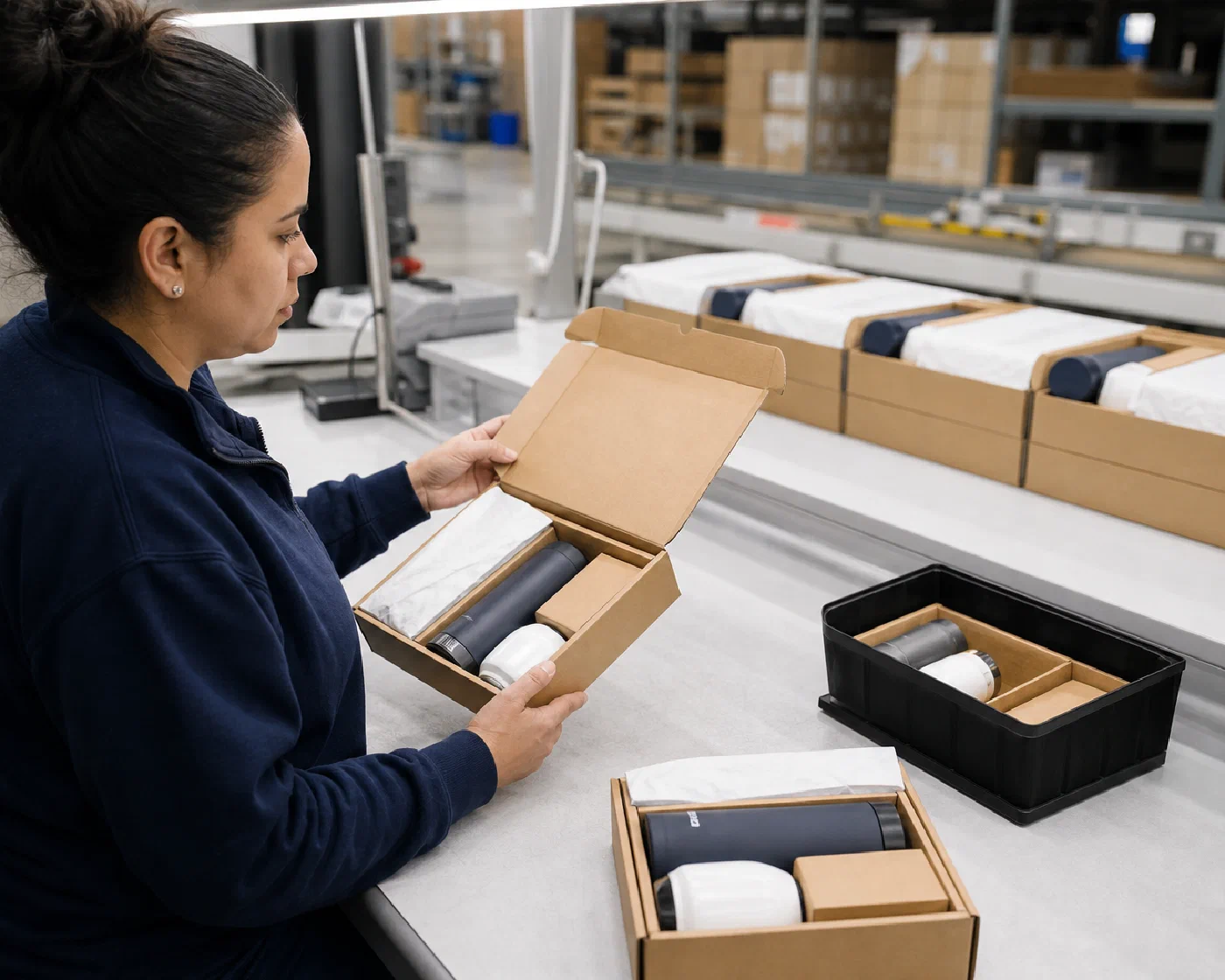

Finished-goods release
A kit becomes inventory only after it passes.
The final handoff should preserve the approved build, identify the finished SKU and put accepted quantity into the inventory position your order channels can use.
Quality acceptance
Confirm the kit meets the active specification and presentation standard.
Finished identity
Apply the correct SKU, lot or version record where required.
Inventory release
Move accepted quantity into available stock for fulfillment or distribution.
Kitting & assembly FAQs
Questions before the first build begins.
A complete specification, available components and an approved quality standard create the starting point.