
Returns management
A product returned.
A clear decision made.
Connect every returned item to its order, condition and approved next step—then carry the result back into inventory and business context.
Identify · Inspect · Decide · Update
A reverse flow built around the product.
The reverse flow has a purpose
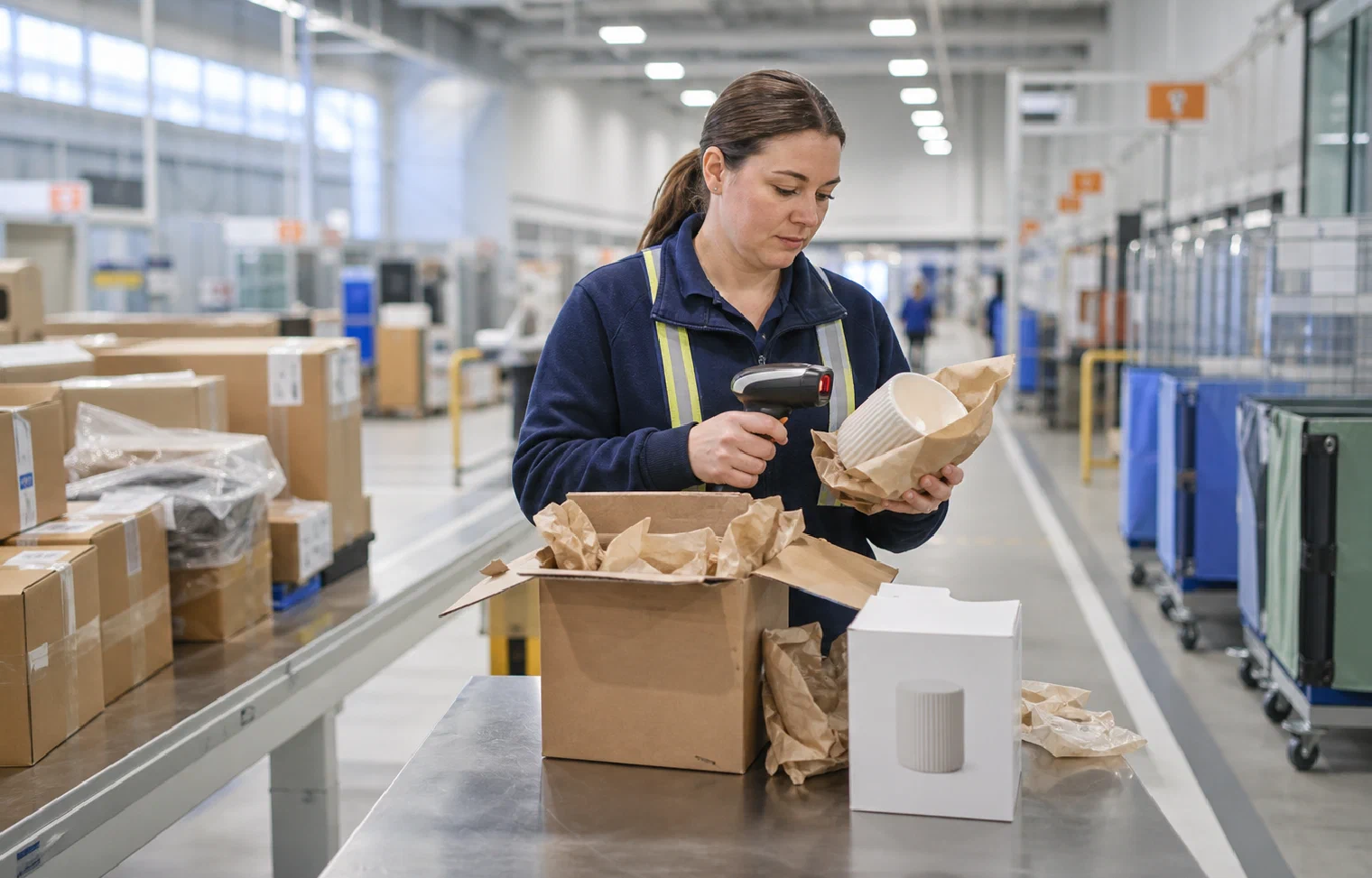
The carton comes back. The product decision begins.
ShipCarte turns the brand’s return policy into an executable warehouse workflow—linking the original order, item identity, inspection criteria and disposition before inventory status changes.
Return identity
Start with the correct order and item.
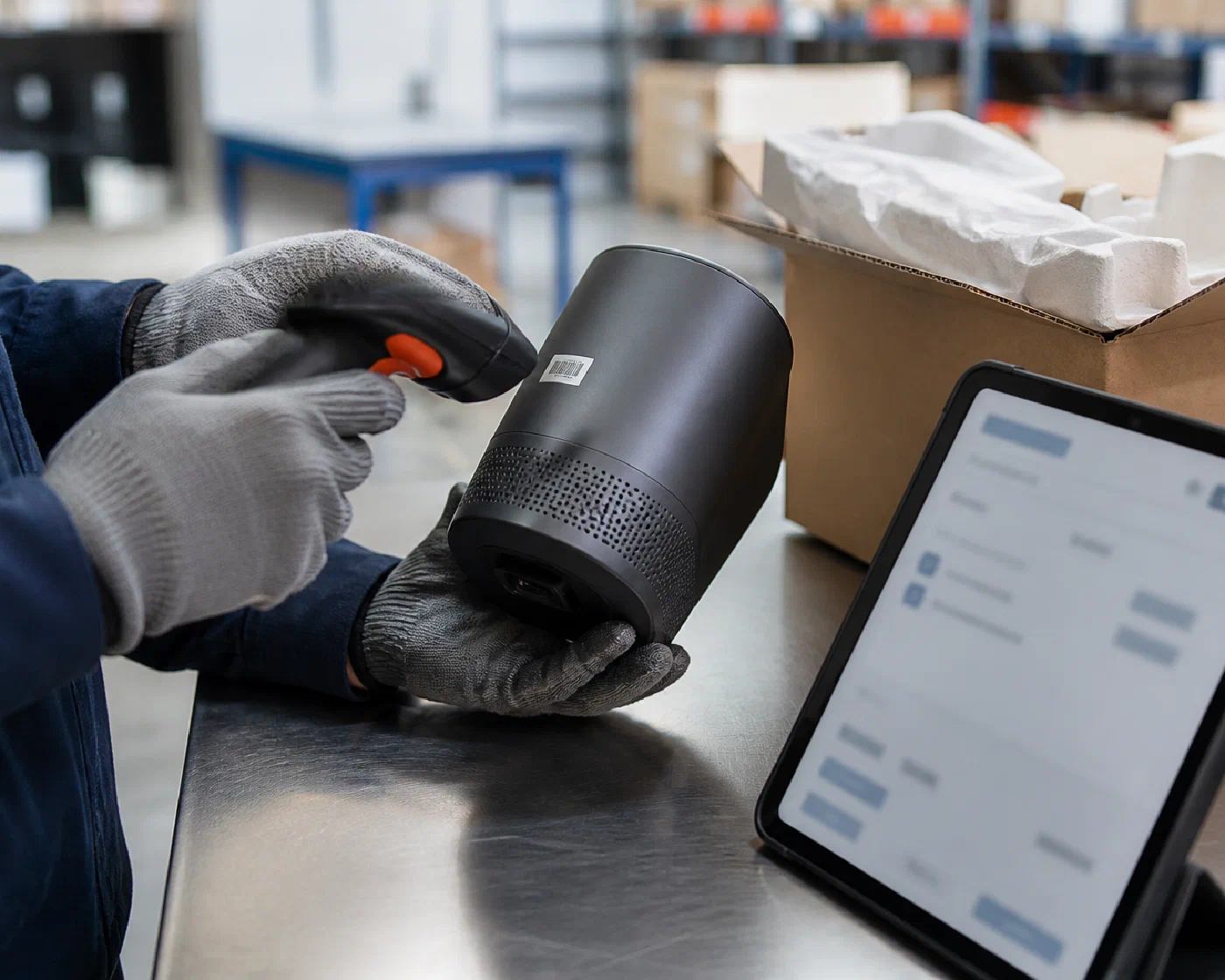
A return needs more than an inbound scan. Match the parcel to the original order, the expected product or variant and the customer’s return reason before deciding what the item has become.
That context gives the inspection meaning. It also helps separate an expected return from an unidentified item, an incomplete set or a product that needs a different review path.
One controlled reverse flow
From inbound return to recorded outcome.
The workflow keeps the physical item, policy decision and inventory record aligned through every stage.
Receive
Bring the parcel into a controlled reverse-logistics queue.
ReturnIdentify
Connect the unit to the expected order, product and reason.
Order & itemInspect
Check completeness, packaging and product-specific criteria.
ConditionGrade
Record an objective condition outcome and required evidence.
ResultRoute
Move the item into its approved restock, rework or hold path.
DispositionUpdate
Complete the item status and return outcome in the record.
InventoryDisposition control
Give every condition a defined next step.
The brand sets the policy; the operation applies it consistently. Physical separation and clear status keep uncertain returns away from sellable stock while recoverable value follows an approved route.
Restock
Release eligible units back to available inventory.
Repackage or rework
Restore approved presentation or completeness before release.
Quarantine
Hold damaged, restricted or uncertain units separately.
Approved recovery
Route non-sellable items to the authorized downstream path.


Reason and outcome
Use the return to expose the upstream issue.
A return can reveal more than a recovery value. Connect what the customer reported, what the warehouse found and what happened next to surface patterns across product, packaging, fulfillment and delivery.
Customer reason
Preserve the original reason and order context at receipt.
Inspection finding
Record the condition, completeness and evidence behind the decision.
Operational action
Link the disposition to recurring causes worth correcting upstream.
Returns management FAQs
Questions before the first return arrives.
A clear policy, product-specific inspection profile and disposition map create the operating standard.