
Temperature-sensitive healthcare products
Condition-sensitive handling.
Led by the product profile.
Translate the product’s defined requirements into storage, packout, monitoring, staging and handoff steps—without assuming one condition fits every item.

Define · Prepare · Protect · Review
The approved requirement leads the workflow.
Requirement-led handling
The category is broad. The operating requirement is specific.
“Temperature-sensitive” is not a complete work instruction. A dependable plan begins with the current product requirements, then defines what must happen in each environment and at every transfer.
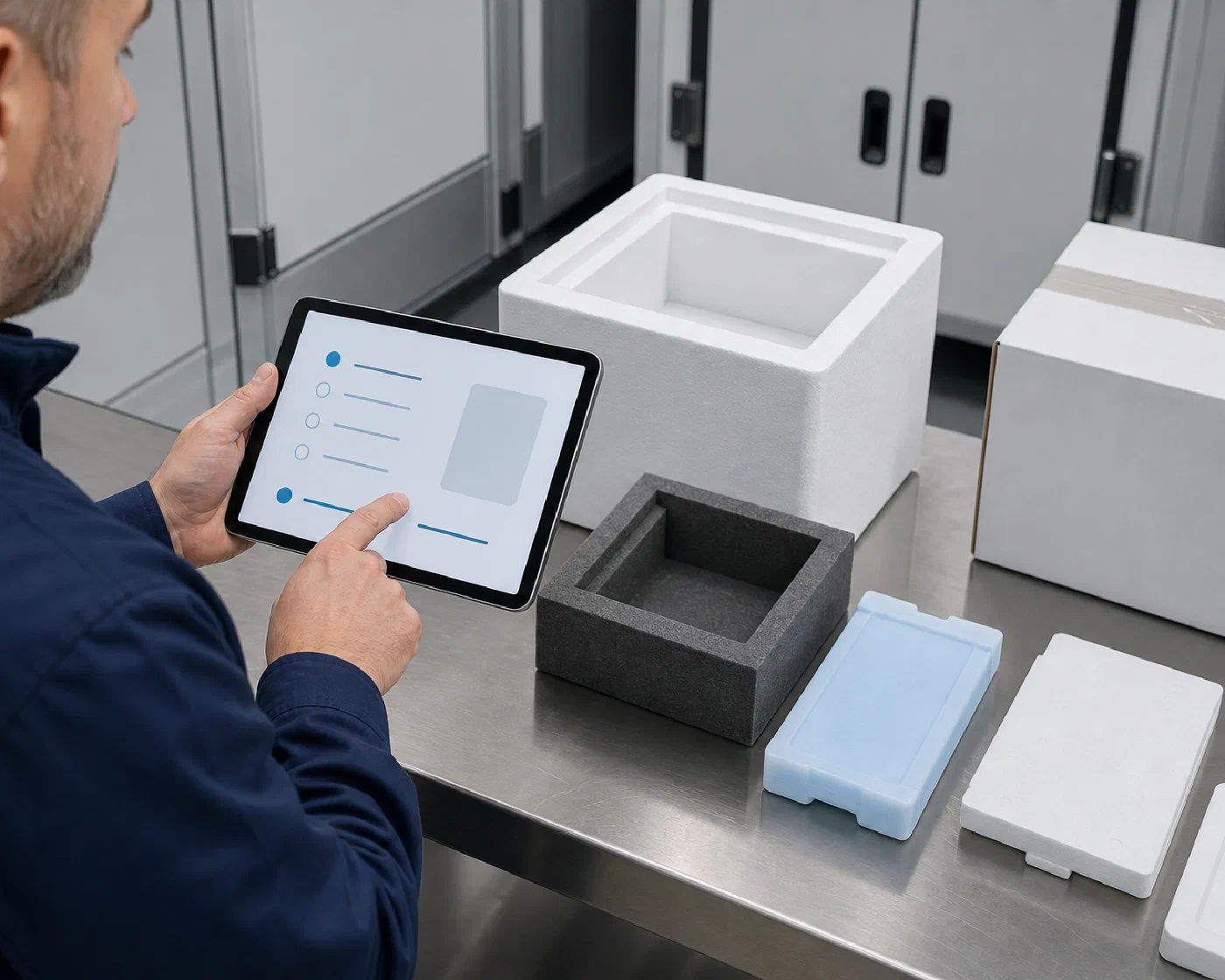
Product profile
Translate the requirement into operating steps.
The product owner’s current information should define the relevant condition, permitted handling, packaging approach, monitoring need and decision authority. Those inputs shape the work—not a generic cold-chain label.
Map the profile across storage, workcell time, staging, transport and receipt before inventory moves. When a requirement changes, the operating instruction needs to change with it.
One condition-aware workflow
From defined requirement to accountable receipt.
The workflow keeps product identity, physical protection and condition evidence connected through each transition.
Define
Confirm the current handling profile and decision owners.
Product requirementPrepare
Ready the correct zone, materials and handling instruction.
Storage & workcellPick
Keep the selected unit and its handling window connected.
Identity & timingPack
Assemble the intended shipper in the required sequence.
Defined configurationMonitor
Position and manage the specified monitoring method.
Device & evidenceHandoff
Transfer the shipment with destination context intact.
Route & receiverControlled transition
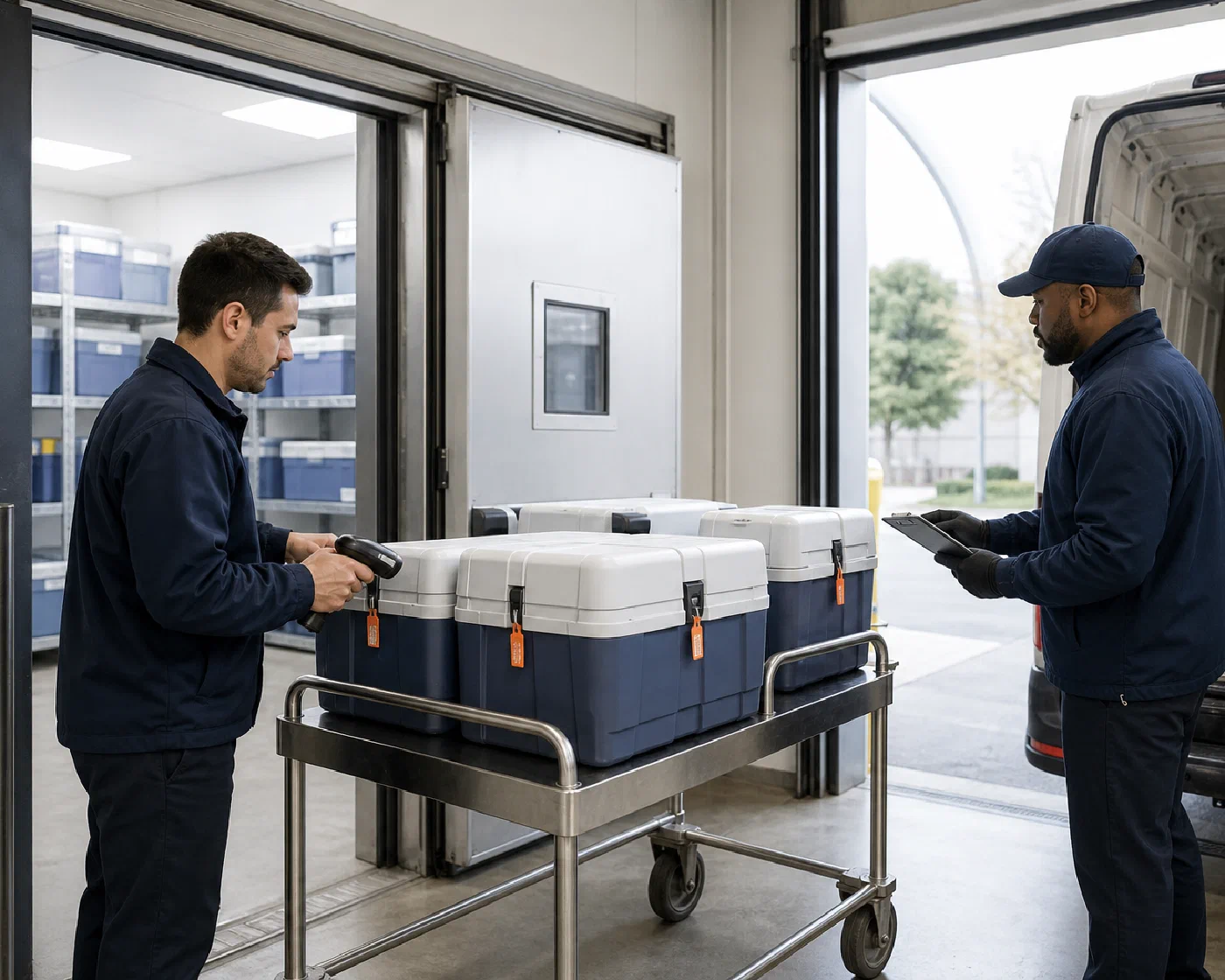
The handoff has its own control point.
A sealed shipper still moves between environments and owners. Confirm shipment identity, readiness, timing, route and receiving expectations when responsibility changes.
Condition context
Carry the defined product requirement into the transfer.
Shipment identity
Connect each closed shipper to the intended order.
Route readiness
Check the selected movement against current shipment needs.
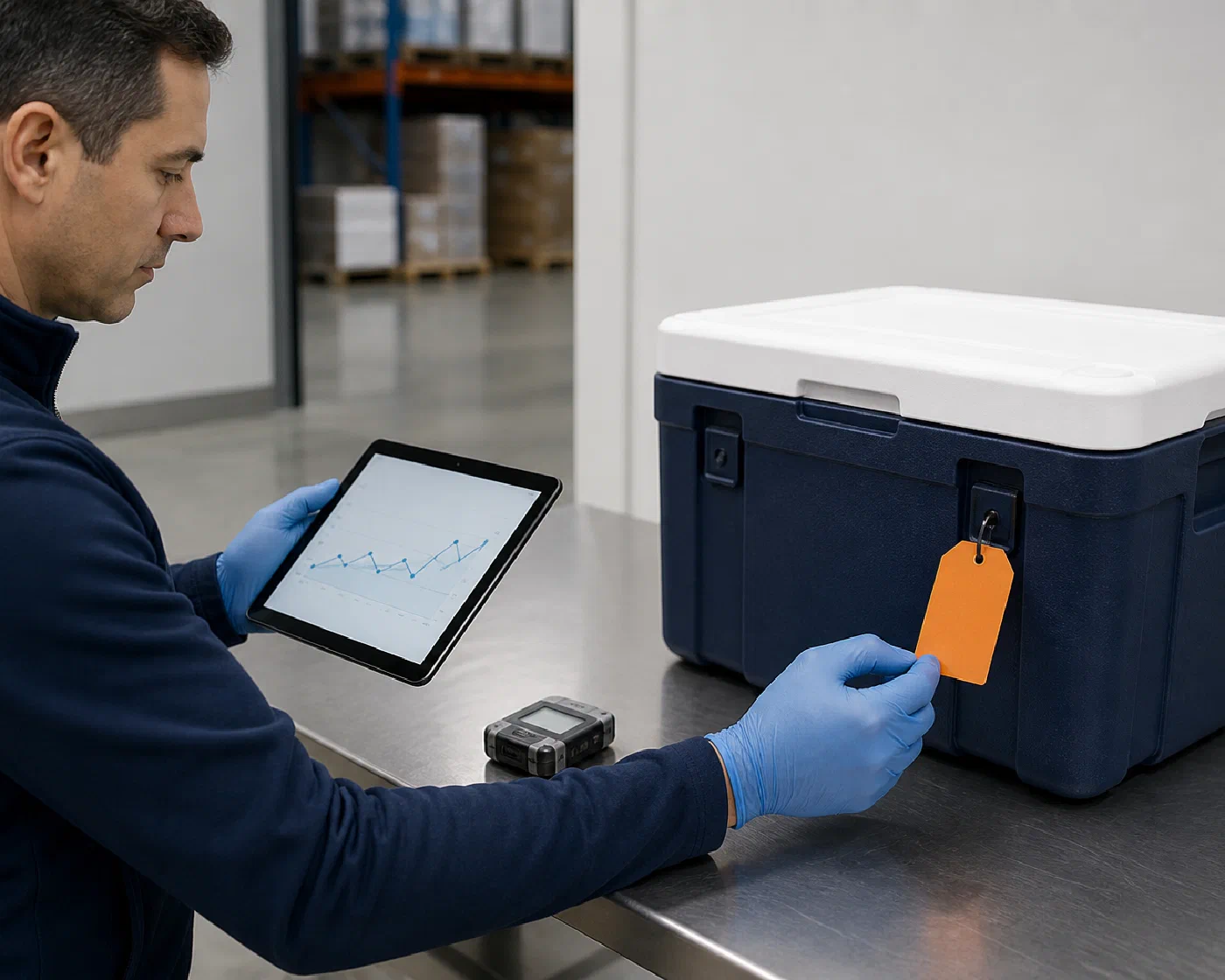
Evidence capture
Preserve the available time, scan and monitoring context.
Possible excursion
Do not turn a reading into an automatic decision.
When available information suggests the defined condition may not have been maintained, isolate the affected scope and preserve the record. Release, rework, return or disposal should follow the authority established for that product.
Hold & identify
Separate the affected handling units and keep their identity intact.
Preserve evidence
Retain the available monitoring, timing, route and event context.
Route the decision
Send the evidence to the product owner or other authorized decision-maker.
Temperature-sensitive product FAQs
Questions before the handling plan is released.
Exact controls depend on the current product requirements, intended route and assigned decision authority.