
Distribution warehousing
One inventory base.
Many destinations.
Position inventory once, then coordinate allocation, preparation and outbound movement across stores, facilities, partners and direct customers.

Position · Allocate · Prepare · Route
Shared inventory turned into destination-ready work.
An active distribution point
The warehouse earns its value between receipt and departure.
Distribution warehousing connects a current inventory position to the order formats, destination requirements and transportation windows downstream customers actually need.

Inbound positioning
Receive inventory for the demand ahead.
Receiving should do more than confirm what arrived. Item identity, condition, handling unit and owner need to be settled before inventory can support reliable allocation.
Reserve placement and forward-pick availability can then reflect product profile, order frequency and the different channels the stock is expected to serve.
One repeatable distribution flow
From shared stock to destination-ready freight.
The workflow keeps inventory commitments, warehouse preparation and outbound movement connected through each handoff.
Receive
Verify the item, quantity, condition and handling unit.
InventoryPosition
Place reserve and active inventory around expected demand.
StockAllocate
Commit eligible stock to the right downstream request.
OrderPrepare
Build the parcel, case, pallet or dedicated load.
FormatStage
Keep completed freight tied to its door and window.
RouteDispatch
Verify the handoff and close inventory movement.
StatusOutbound formats
Prepare each destination in the format it can receive.
The same inventory base can support very different physical orders. Packaging, consolidation, labels, appointment timing and transportation all need to follow the receiving environment.
Parcel
Individual cartons for direct or business delivery.
Case
Defined pack quantities for stores and partners.
Pallet
Secured handling units for LTL and receiving docks.
Dedicated load
Coordinated capacity for larger distribution programs.
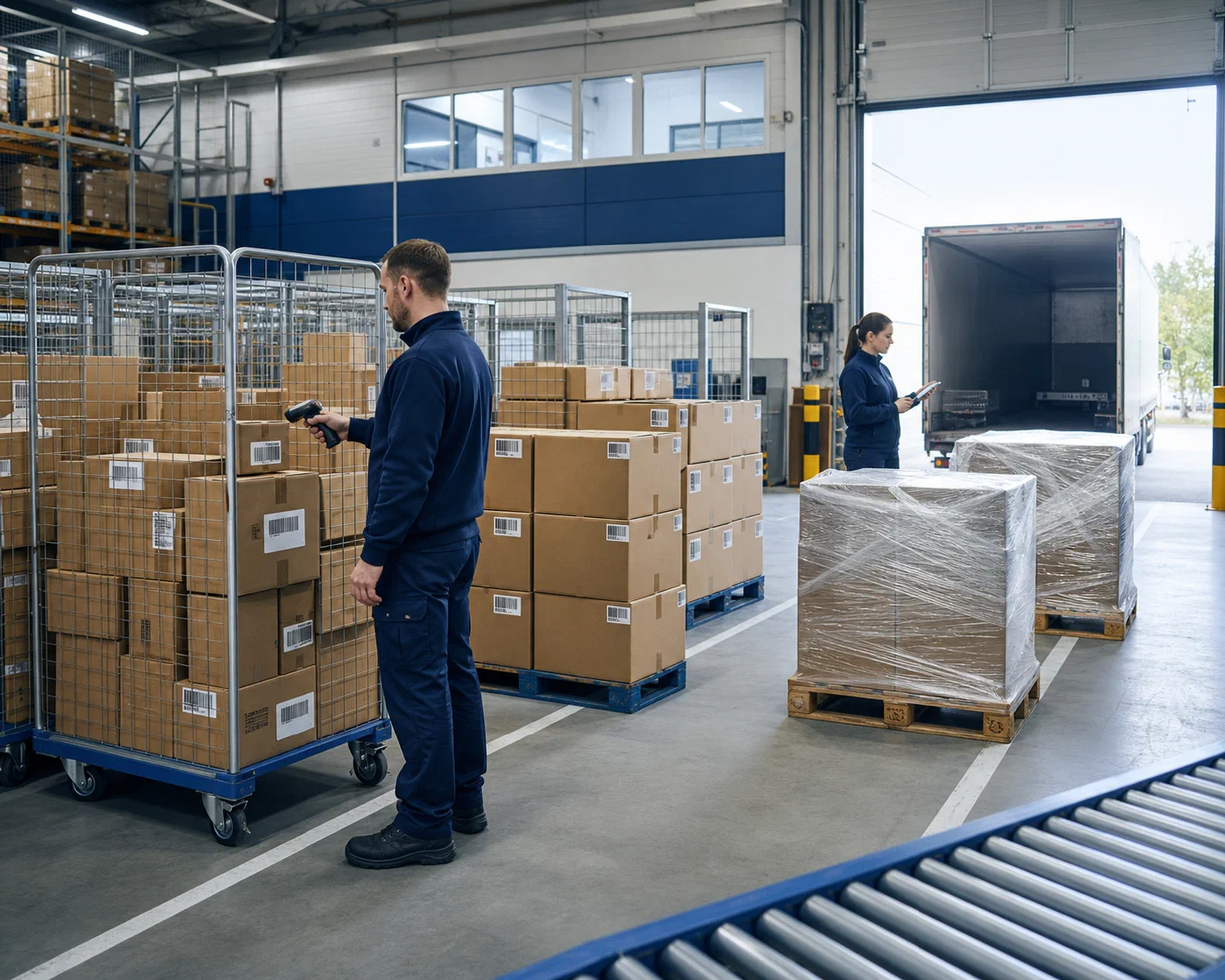

Distribution visibility
See stock, orders and movement together.
A useful distribution view explains what is available, what has been committed and what has physically moved. That context helps the next replenishment decision arrive before a shortage does.
Availability
Separate usable inventory from holds, reservations and in-process work.
Commitment
Connect allocated stock to the customer, channel and required date.
Outbound closeout
Confirm what left, how it moved and which exception remains open.
Distribution warehousing FAQs
Questions before inventory serves several destinations.
A dependable distribution warehouse connects current stock to the format and timing each downstream order requires.