
Public warehousing
Public warehousing.
Flexible capacity, clearly controlled.
Use shared warehouse infrastructure for changing inventory needs while keeping ownership, location, status and movement rules specific to your operation.
Profile · Store · Control · Flex
Shared infrastructure without a shared inventory record.
Capacity with a clear operating rule
Shared infrastructure works when the rules stay specific.
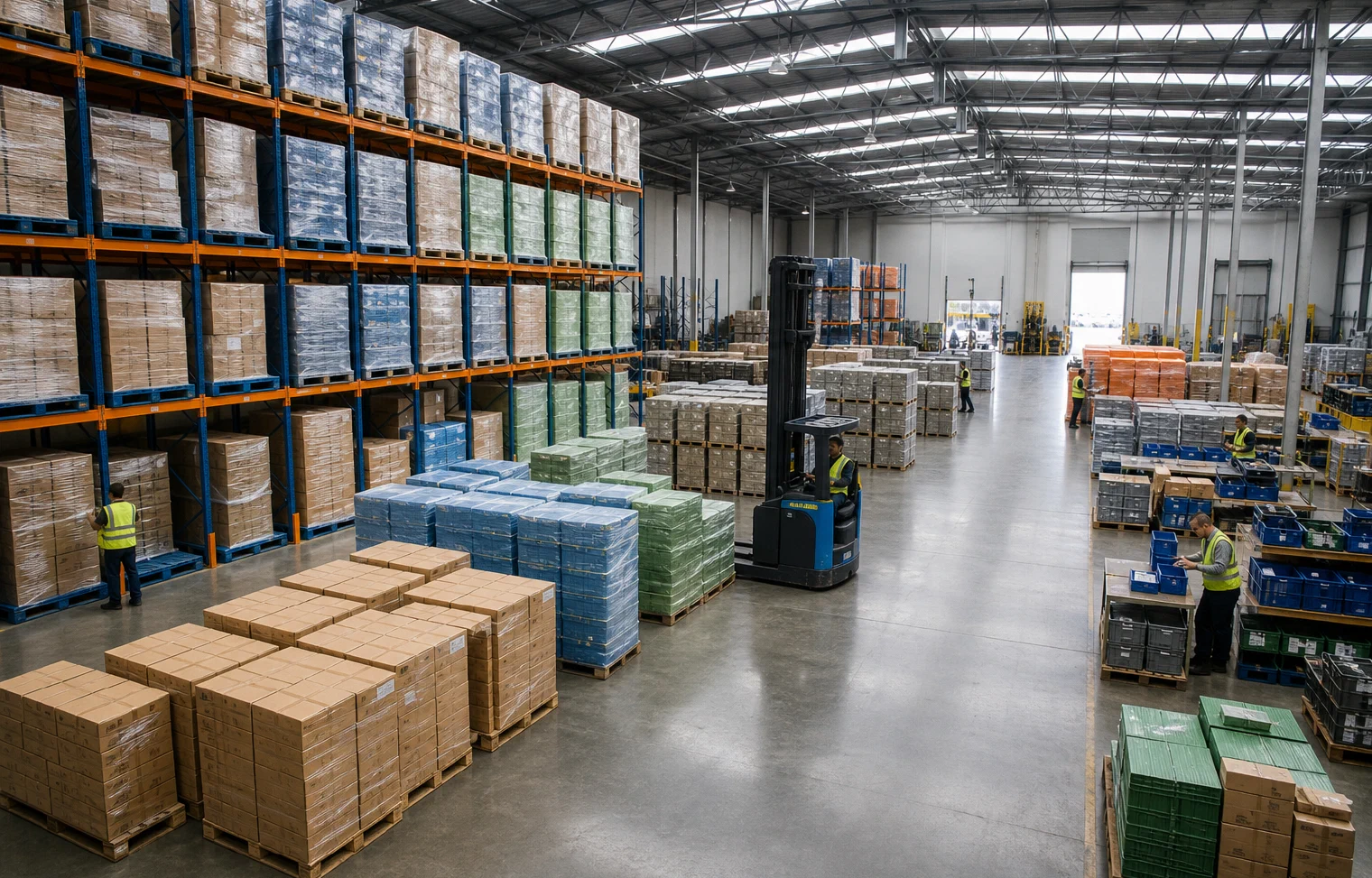
Public warehousing can absorb seasonal stock, overflow inventory, a new market program or a changing footprint without asking the business to build around every peak. The flexibility comes from the space; the control comes from keeping each receipt, location, status and release tied to the right inventory owner.

Capacity planning
Plan usable space, not just pallet positions.
Two inventory programs with the same pallet count can ask very different things of a warehouse. Dimensions, weight, stability, stackability, turnover and access requirements all influence which capacity is truly usable.
Add the average and peak position, expected inbound rhythm, order type and outbound windows to create a storage plan that fits the physical stock and the work around it—not just a number on a capacity report.
The shared-space workflow
Flexible footprint. Repeatable checkpoints.
Capacity can change while the controls that make inventory usable stay consistent from arrival through outbound reconciliation.
Profile
Define the handling unit, physical product and volume pattern before arrival.
InventoryReserve
Match rack, floor, bin or oversized space to the current requirement.
CapacityReceive
Verify ownership, quantity and condition at the inbound checkpoint.
ProductLocate
Assign each handling unit to a recorded location and inventory status.
StockPrepare
Release storage, pick, pack or value-added work against clear instructions.
OrdersReconcile
Close outbound activity and keep the remaining inventory position current.
MovementInventory control
Shared building. Distinct inventory record.
Public warehousing should not blur who owns the stock or what can happen to it. Handling-unit identity, recorded locations and deliberate status changes create separation inside a flexible shared environment.
Defined locations
Assign rack, floor and work areas to the correct inventory.
Traceable movements
Capture putaway, transfer, pick and adjustment events.
Status discipline
Keep available, allocated, hold and non-conforming stock distinct.
Named ownership
Connect every handling unit to the right client and program.


Flexible capacity
Add room without losing the operating standard.
Seasonal demand, a promotion, constrained facilities or a new region can change the required footprint quickly. The space can flex, but receiving, location, status and release rules should remain familiar.
Prepare the peak
Share the inventory profile, timing and service demand before volume arrives.
Flex the footprint
Adjust storage and staging while protecting product access and movement control.
Review the fit
Reconcile the peak and decide whether shared, expanded or dedicated capacity fits next.
Public warehousing FAQs
Questions before reserving flexible capacity.
Public warehousing works best when the inventory profile and operating rules are clear before product arrives.